
- Design: Globe valves typically have a spherical body with a baffle or partition that directs the flow of fluid. The closure element (plug or disc) moves vertically against a seat to regulate the flow. The design allows for more controlled flow regulation compared to gate valves.
- Materials: Globe valves can be made from various materials, including carbon steel, stainless steel, and various alloys, to handle different types of fluids and operating conditions.
- Pressure Rating: Globe valves are available in various pressure ratings, such as ANSI Class 150, 300, 600, 800, 1000 etc., to suit different pressure requirements. Higher pressure on request.
- Size Range: They come in a range of sizes, from small to large diameters, depending on the application.
- End Connections: These valves can be equipped with different end connections, such as flanged, threaded, or welded, depending on the piping system and application requirements.
Globe Valve
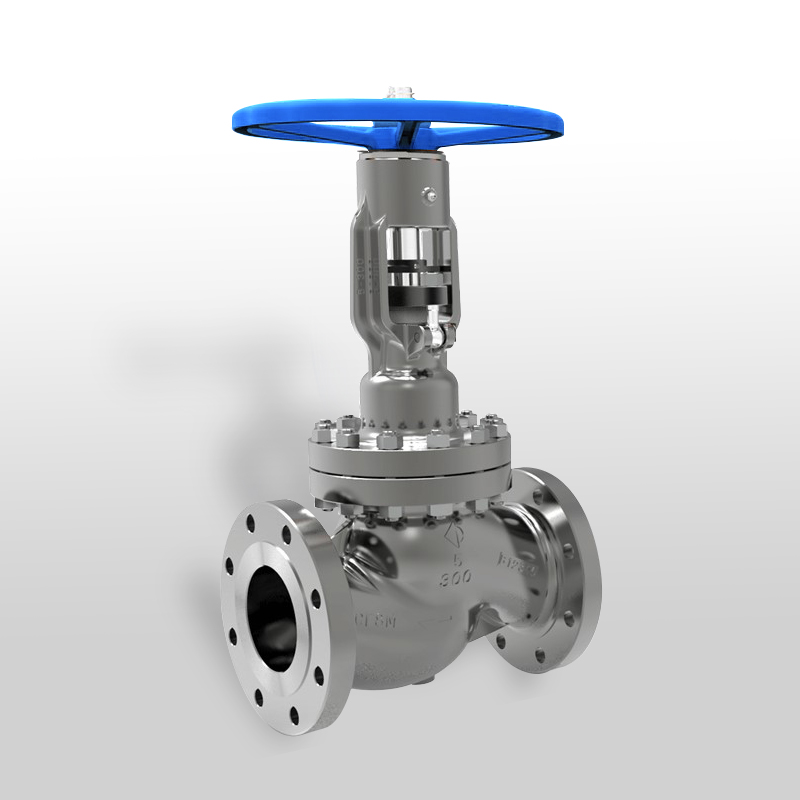
Globe Valve
An API standard globe valve is a type of valve commonly used in industrial applications for regulating or throttling fluid flow.
General Description
- Function: Globe valves are primarily designed for regulating or throttling the flow of fluids. They provide better control over flow compared to gate valves due to their design, which allows for more precise adjustments. They are also used for on/off control in applications where throttling is not required.
- Construction: A globe valve consists of a spherical body with an internal baffle (the globe) that directs the fluid flow through a passage. A movable plug or disc (the closure element) is positioned within the valve body to control the flow. The plug moves up and down to regulate the size of the flow passage.
API Standards
- API 600/602/603/623
- Oil and Gas, Water and Wastewater, Chemical Processing etc.
-
Globe valves are typically operated manually using a handwheel or lever, but they can also be automated with electric or pneumatic actuators for remote or automatic control.