
- Bellows Seal: The bellows assembly is the main feature that ensures no leakage around the stem. The bellows are usually made of stainless steel or other corrosion-resistant materials and are designed to handle high pressures and temperatures.
- Materials:
- Body Materials: Cast iron, carbon steel, stainless steel, and various alloys suited to the application.
- Bellows Materials: Stainless steel or other durable, flexible materials.
- Gate Materials: Stainless steel, bronze, or other corrosion-resistant materials.
- Seat Materials: Elastomers (such as PTFE or EPDM) or metals, depending on temperature and pressure requirements.
- Pressure Rating: Bellows sealed gate valves are available in various pressure ratings, such as ANSI Class 150, 300, 600, etc., to meet different application needs.
- Size Range: These valves come in a range of sizes to fit different pipeline diameters and flow requirements.
- End Connections: Can be equipped with various end connections, including flanged, threaded, or welded, depending on the system and installation requirements.
Bellows Seal Gate Valve
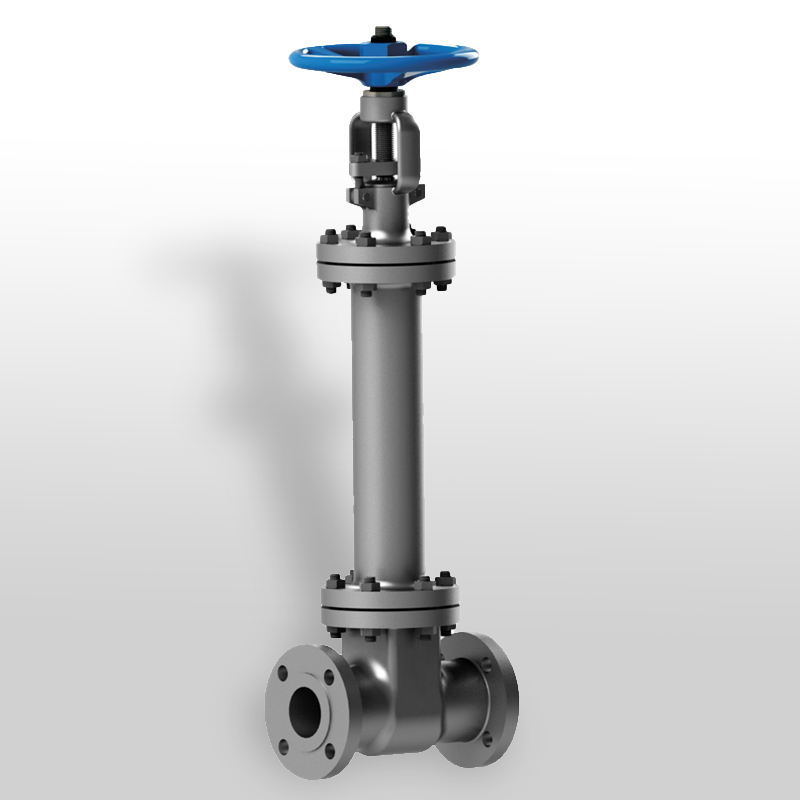
Bellows Seal Gate Valve
API standard bellows sealed gate valves are designed to offer a high level of sealing integrity, particularly in applications where leakage prevention is crucial. These valves are utilized in industries that require precise control over fluid flow and where the media being handled is hazardous, toxic, or corrosive. The bellows seal ensures that there is no leakage around the stem, making these valves ideal for demanding applications.
API Standards
API 600/623/607
General Description
- Function: Bellows sealed gate valves are used to isolate or control the flow of fluids in pipelines, while providing a high degree of leak-proof performance. The bellows seal around the stem prevents any leakage of the media, making them suitable for applications with critical leakage requirements.
- Construction: Key components of a bellows sealed gate valve include:
- Gate (Blade): A flat, sharp-edged gate that moves vertically within the valve body to open or close the valve. The gate’s design allows for a tight shut-off when closed.
- Body: The main structure of the valve, which houses the gate and other internal components. The body is typically made from durable materials such as cast iron, carbon steel, stainless steel, or alloy steels.
- Stem: Connects the gate to the actuator or manual handle and allows for the vertical movement of the gate. In bellows sealed valves, the stem is covered by a bellows assembly.
- Bellows Assembly: A flexible, usually metallic bellows encases the stem, providing a seal to prevent leakage. The bellows are designed to handle pressure and temperature changes while maintaining a tight seal.
- Seats: The sealing surfaces around the gate that ensure no leakage when the valve is closed. Seats can be made from elastomers (like PTFE, EPDM) or metal, depending on the application requirements.
- Oil and Gas, Chemical Processing, Power Generation, Pharmaceuticals
- Operation: Bellows sealed gate valves can be operated manually with a handwheel or lever, or automatically with electric or pneumatic actuators. The gate moves vertically to open or close the valve, while the bellows maintains a tight seal.